Birds of prey are some of the most spectacular and fascinating birds out there. So, it’s not surprising that they have some pretty cool facts about them! Here are our picks of the most interesting facts about birds of prey. We hope you learn something new... Harris...
Moet
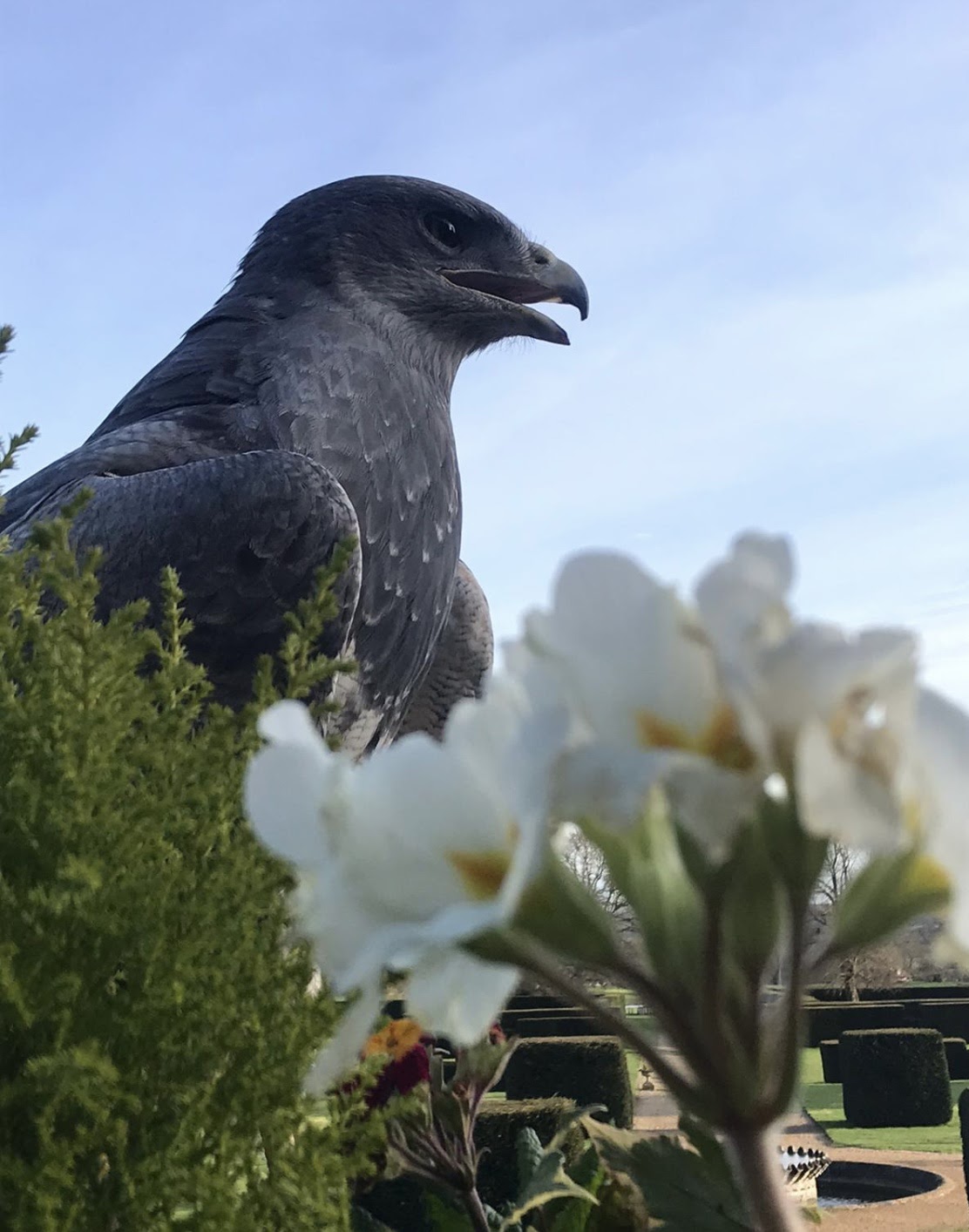
Chilean Blue Eagle
Scientific Name: Geranoaetus Melanoleucus
Conservation Status: Least Concern
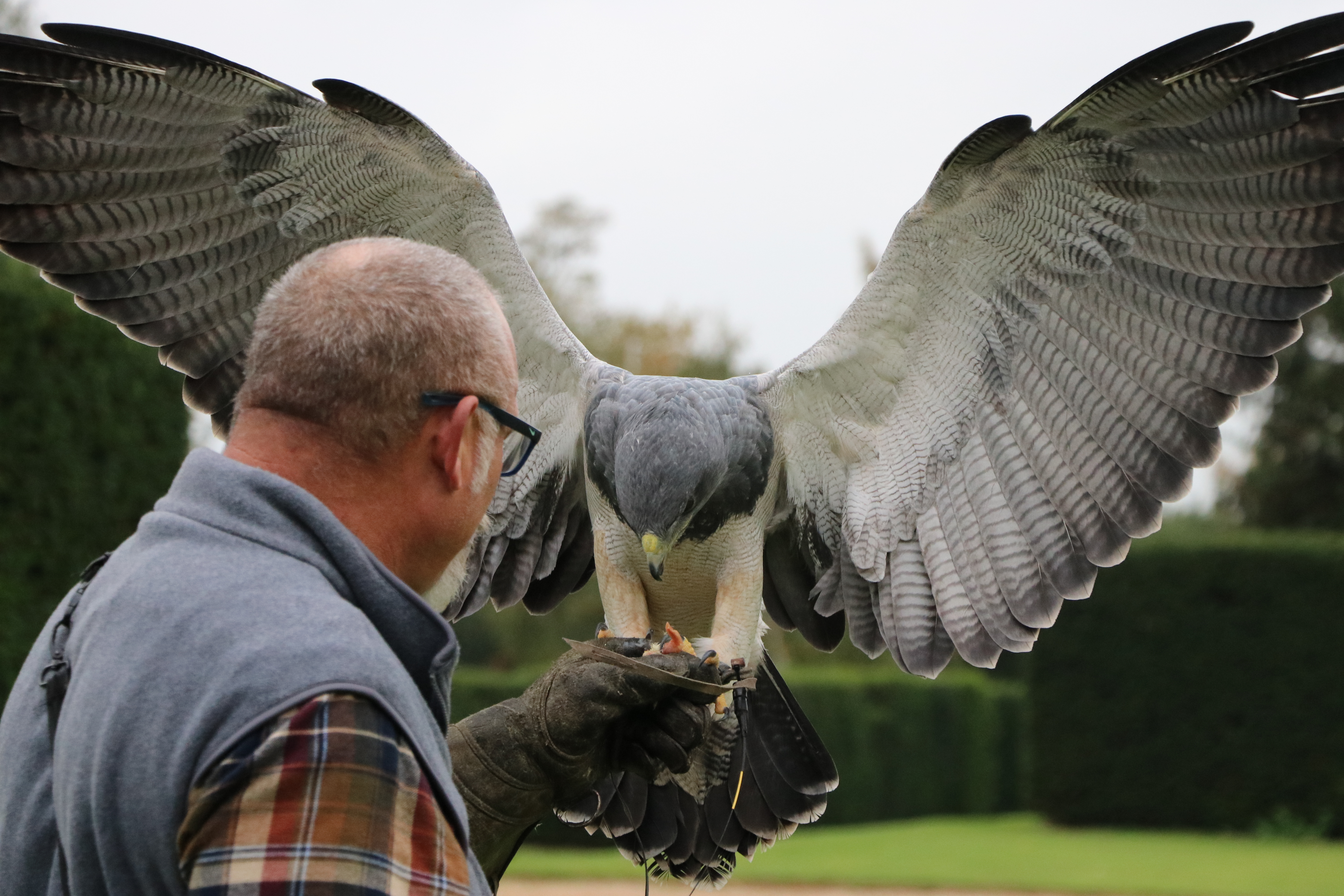
Moet is one of the two Chilean Blue Eagles here at the Hawking Centre and my word, what a bird he is. If you have ever had the pleasure to watch Moet fly, you’ll know what we’re talking about! Most days of the week, Moet can be seen soaring over the manor or ducking and diving at the wildlife on the grounds.
Often too smart for his own good, Moet loves nothing more than giving his handlers a run for their money!
Chilean Blue Eagles
Although a timid species, they will fiercly defend their territory and young. The black-chested buzzard-eagle is found in mountainous or hilly terrain with sparse vegetation, shrubland, or (in the south of its range) nothofagus forest, where it spends a lot of time soaring in thermals and vertical drafts while looking for prey. You can very often see Moet doing the exact same on our experience days. It’s a sight to behold.
Chilean Blue Eagles are helpful to farmers as they hunt a large number of Europeans Rabbits which are pests to the farmers and can have a devastating effect on crops if their numbers are left unchecked. Alongside European Rabbits, Chilean blue Eagles will take a vast range of prey including:
Degus, Viscachas, Skunks, Gray Foxes, burrowing owls, Buff-necked Ibis’, and much more occasionally carrion. They have also been known to compete for Carrion with the much larger andean condor.
The Chilean Blue Eagle has two known sub-species. The Eastern Black Chested Buzzard-Eagle and the Western Black Chested Buzzard-Eagle. The two are somewhat easily identifiable as the Eastern sub-species is larger and is plain white belly whereas the Western is smaller and has a white belly with fine grey barring.

Fun Facts About Chilean Blue Eagles
#1
In their juvenile plumage, Chilean Blue Eagles look so different that they are even know by a different name. The Black-Chested Buzzard Eagle.
#2
It takes around 5 years for Chilean Blue Eagles to develop the signature blue plumage.
#3
Although called an Eagle. Chilean Blue Eagles are not classed as ‘true’ eagles like the famous Golden Eagle.
How Your Adoption Helps
Every little helps when it comes to caring for animals. Your adoption will help us feed, train, house, and care for our team as well as help toward routine veterinary visits!
10% of your donation will go toward a charity such as Vulpro, the Barn Owl Trust, and the Peregrine Fund in a show of support to their monumental efforts.
How To Adopt a Bird
Step 1
Pick which member of our team you would like to adopt!
Step 2
Select the Package that works for you.
For as little a £30, you can adopt a member of our team. You can choose a 3 month, 6 month, or 12 month adoption!
Step 3
Head on over to the checkout and you’re off!
Don’t forget, with your adoption pack you can also enjoy a picture of your lucky adoptee, a certificate of adoption, and tickets to visit your new feathered friend!